
When manufacturers evaluate automation, attention often centers on production equipment, machining operations, and assembly processes. Internal material transportation receives less attention, despite being a recurring activity throughout the manufacturing day.
Autonomous mobile robots address this part of the production process by transporting materials between designated locations.
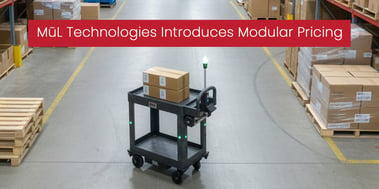
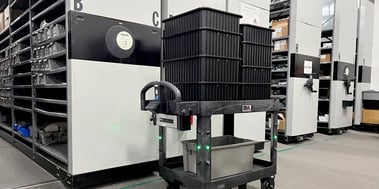
One American manufacturer introduced a MARC cart to automate parts transportation. At the recorded utilization rate, MARC could complete approximately 3,677 material-handling trips annually. This sustained activity illustrates how frequently internal transportation tasks occur within a manufacturing operation.
The MARC cart recorded the following activity:
| Performance Metric | Recorded Result |
|---|---|
| Time in service | 14 months |
| Total recorded trips | 4,290 |
| Recorded work time | 1,750.06 hours |
| Average trips per month | 306 |
| Distance traveled | 229.60 km (142.67 miles) |
Source: MARC onboard operating data.
Over 14 months, a single MARC cart completed 4,290 material-handling trips, averaging more than 300 trips per month. At the same utilization rate, this represents approximately 3,677 trips annually.
The significance of these figures lies in the cumulative volume of material movement. Individual transportation tasks may take only a few minutes, but their frequency creates opportunities to recover employee time through automation.
For manufacturers evaluating autonomous mobile robots (AMRs), this operating data offers a measurable example of sustained utilization and a practical basis for estimating potential productivity improvements.
Evaluating the financial return of autonomous material handling requires more than measuring completed trips. The key consideration is how much employee time each automated movement replaces.
Depending on the facility layout and transportation task, that could be three, five, or ten minutes per trip.
Using this deployment's annualized volume of approximately 3,677 trips and an assumed fully burdened labor cost of $55 per hour, the potential 12-month productivity value is:
| Labor saved per trip | 12-Month Productivity Value | Modeled ROI |
|---|---|---|
| 3 min | $10,112 | 1% |
| 5 min | $16,854 | 69% |
| 10 min | $33,707 | 237% |
Estimates assume approximately 3,677 annual trips based on 4,290 recorded trips over 14 months, a $55 fully burdened hourly labor cost, a $10,000 initial purchase price, and no additional costs. Actual labor savings and financial returns have not been verified.
Under the five-minute scenario, MARC could recover approximately 306 employee hours annually, representing nearly $17,000 in potential productivity value.
The calculation illustrates an important distinction: the financial opportunity comes not from the number of trips alone, but from the amount of productive employee time those automated movements can recover.
Manufacturing operations depend on employees performing specialized production tasks, from machining and assembly to equipment operation and quality inspection.
Depending on the manufacturing environment, autonomous mobile robots can support a variety of repetitive material-handling applications, including:
These transportation tasks are necessary, but they do not require the same technical expertise as production activities. By assigning repetitive material movement to MARC, manufacturers can reduce interruptions and allow employees to remain focused on higher-value work.
The opportunity is not necessarily to reduce headcount. It is to increase productive capacity by making better use of the employees already available. While the manufacturer's specific applications were not documented, 4,290 recorded trips over 14 months demonstrate sustained material-handling activity with a single autonomous mobile robot.
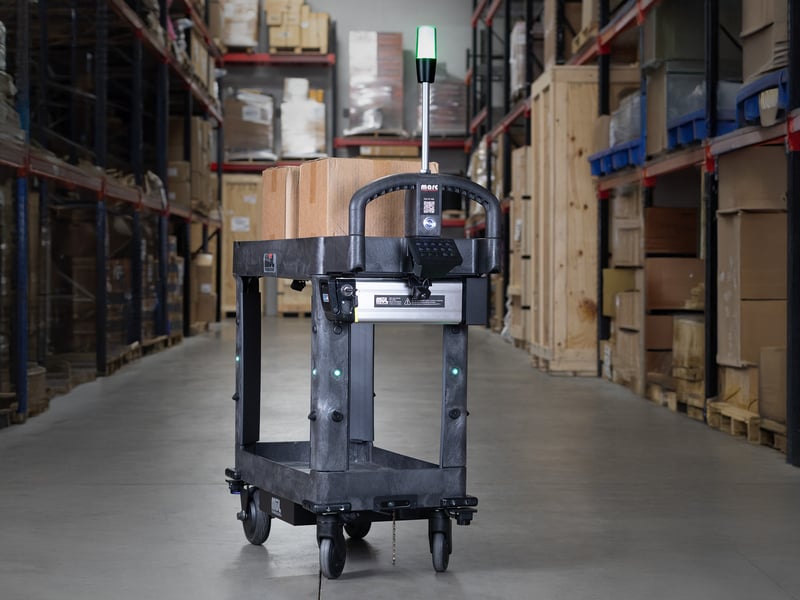
Manufacturers don't need to automate an entire facility to improve material flow. MARC from MūL Technologies offers a practical starting point, handling repetitive transportation tasks without requiring facility Wi-Fi or installed navigation infrastructure.